
Schedule C Profit or Loss from Business (Sole propritor)
Self Employment /Business Tax Deductions
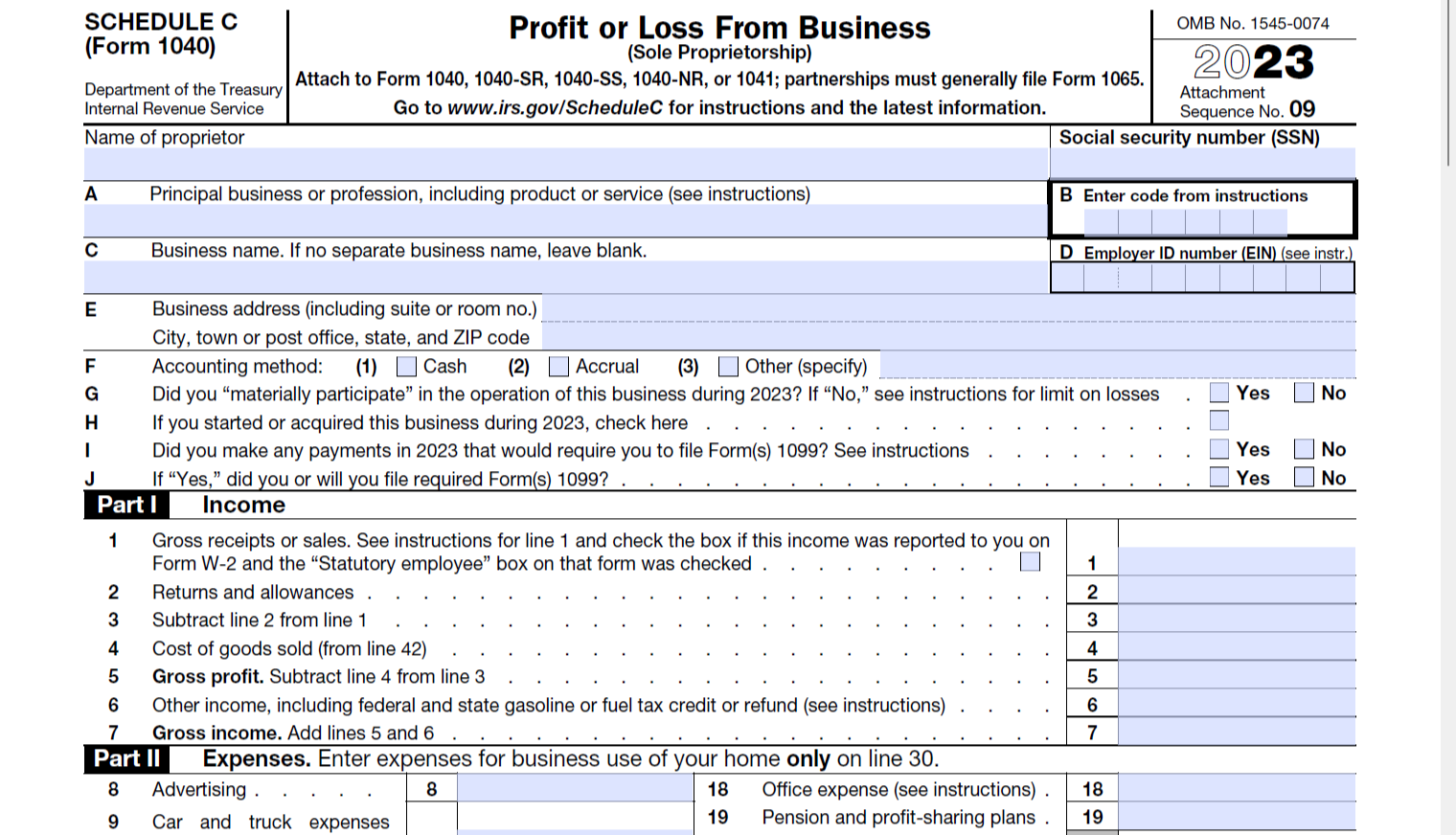
Use Schedule C to calculate self-employment or business income or losses for sole proprietors. Schedule C is used when filing Form 1040 Individual Income Tax Return. Income reported on information return Form 1099 NEC is also reported on Schedule C.
Deductions Reported on Schedule C
- Accelerated Depreciation and Asset Purchases
- Home Office Deduction
- Vehicle Expenses
Schedule C (Form 1040) is used by self-employed individuals to deduct business expenses, including home office costs, vehicle usage, and asset depreciation. Key deductions include Section 179 expensing (up to 100% of asset cost), the mileage rate or actual vehicle expenses, and home office costs (rent/mortgage interest, utilities).
Income
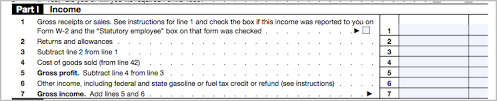
Schedule C (Form 1040) Part I determines your business's gross income by reporting total sales, services, and gross receipts, then adjusting for returns and cost of goods sold. You will need your Profit and Loss Statement, you report all income—cash, checks, and 1099 income—to calculate the final gross income.
Key Components of Income:
Line 1 (Gross Receipts or Sales): Enter total revenue from client services or product sales.
Line 2 (Returns and Allowances): Subtract any refunds or discounts given.
Line 3 (Subtract Line 2 from Line 1): Net sales.
Line 4 (Cost of Goods Sold - COGS): If you sell products, enter the figure from Part III here to determine gross profit.
Line 7 (Gross Income): This represents your gross profit/income, which carries over to Part II to calculate net profit.
You have to include all sources of income, including 1099-NEC, 1099-MISC, and cash income, to avoid underreporting notices.

Filing Schedule C
Schedule C (Form 1040) is essential for sole proprietors, gig workers, and single-member LLCs to report business income and expenses to determine net profit/loss. It requires meticulous, year-round recordkeeping (receipts, logs) to support deductions, including cost of goods sold (Part III) and vehicle expenses (Part IV), which often require supporting calculations.
Key Aspects of Schedule C Filing:
- Detailed Records: You must maintain records
such as receipts, cancelled checks, and invoices
to support all claimed deductions and avoid
potential IRS issues.
- Information Required: The form requires your
business name, accounting method (cash or
accrual), principal activity, and detailed income/
expense breakdowns.
Components of Schedule C:
- Part I: Gross receipts or sales.
- Part II: Expenses (e.g., advertising, car/truck, legal, rent, wages).
- Part III: Cost of Goods Sold.
- Part IV: Vehicle Information.
- Part V: Other Expenses.
Proper documentation ensures you can maximize deductions while maintaining compliance.